

Can Startups Help Build Better Data Centers?
Google, Microsoft, Amazon and Meta Join Elemental's Data Center Innovation Initiative

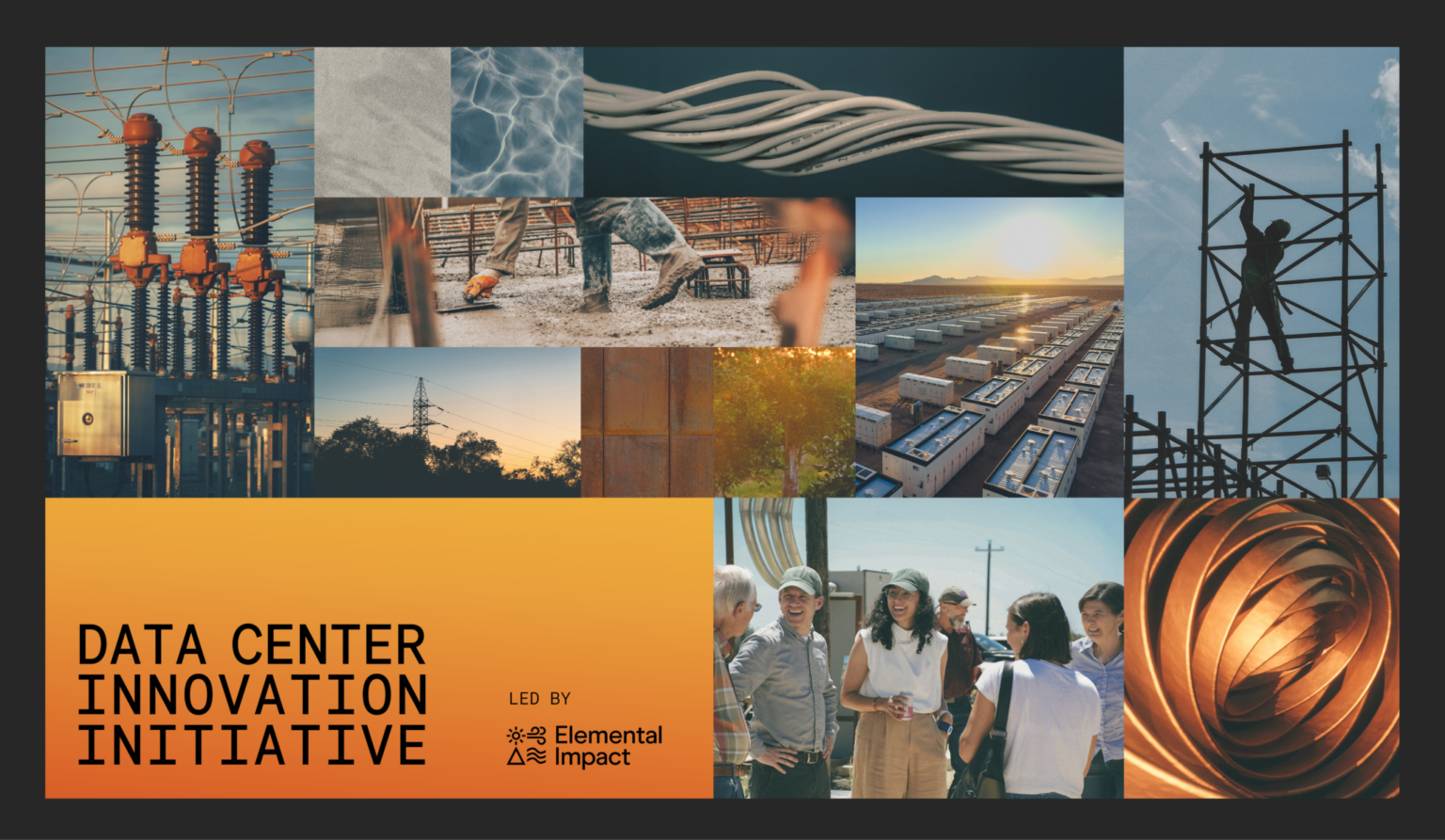
The largest players in digital infrastructure are looking for startups to help them innovate, providing societal benefits along the way.
Nonprofit Elemental Impact has launched the Data Center Innovation Initiative to accelerate next-generation energy and materials technologies for data center infrastructure.
The initiative brings together Amazon, Google, Meta and Microsoft alongside philanthropic partners including Breakthrough Energy Discovery, Salesforce and others.
The DCII will invest $500,000 to $5 million per project in up to 10 technology startups through 2027. The focus areas include:
Energy storage for reliable clean power
Advanced electrical systems for efficiency and resilience
Novel industrial cooling solutions that reduce energy and water use
Low-carbon materials to lower the footprint of new construction.
“We see this historic buildout of data centers as a way to pull forward important innovations that we’ve been investing in for many years, across energy, materials and water,” said Dawn Lippert, CEO and Founder of Elemental Impact. “By collaborating with Amazon, Google, Meta and Microsoft, we can help accelerate how these entrepreneurs are deploying, commercializing technologies that reduce emissions and deliver more positive impact for communities, including affordable, reliable energy.”
Startups are invited to apply by July 15, 2026.
How It Will Work
The DCII aims to move promising technologies beyond the lab by testing them in existing data centers or demonstration sites to assess performance under real-world operational conditions.
Elemental will provide capital and support to help startups navigate the complexities of scaling infrastructure technology. The hyperscale partners will help identify priority technology areas, provide strategic input during diligence, piloting technology projects and sharing outcomes to speed industry-wide adoption.
Why It Matters
DCII aligns with a fundamental tension in the data center sector. AI demand is accelerating the buildout of power-hungry infrastructure at a pace that strains grids, supply chains and community resources.
The constraint is no longer just capital or ambition. It’s the pace at which new energy, cooling and materials technologies can move from proof-of-concept to deployment at scale.
That transition, from lab to field, is where many promising startups stall.
“Many technologies fail to scale not on technical performance, but in the transition to early deployment capital,’ said Wilson Sonsini partner Bob O’Connor, whose firm is advising the initiative. “DCII is a practical, collaborative model to address that gap.”
The Hyperscale Role
The participation of four of the world’s largest cloud and AI infrastructure builders gives DCII participants direct access to operating environments.
“Our goal isn’t just to prove these technologies work at scale. It’s to create a shared playbook that accelerates adoption across the industry and delivers real benefits to the communities where we operate,” said Kara Hurst, Chief Sustainability Officer at Amazon, in the DCII launch announcement.
Elemental described the AI boom as a once-in-a-generation opportunity to shape how energy and industrial systems are built.
“Data centers offer a key starting point, creating unprecedented demand and momentum for entrepreneurs building new technologies. These technologies can extend far beyond data centers, powering schools and hospitals, supporting efficient manufacturing, and expanding access to affordable energy.”
Meta’s Nat Sahlstrom, VP of Energy and Sustainability, highlighted the potential for data centers to serve as launchpads.
“What excites us about the DCII is the focus on advancing emerging technology projects, building on Meta’s commitment to designing, building and operating sustainable and innovative data centers,” Sahlstrom said. “By sharing what we learn together, we can support entrepreneurs to scale faster and move these innovations to real-world impact.”
Microsoft’s Melanie Nakagawa, CVP and Chief Sustainability Officer, emphasized the ecosystem-wide approach.
“Our focus is on helping scale solutions to deliver reliable, clean power and sustainable materials, while improving efficiency and resiliency in the communities where we operate,” Nakagawa said.
Google’s Kate Brandt, Chief Sustainability Officer, positioned the effort within the company’s broader climate track record.
“This initiative with Elemental Impact complements our third decade of climate action and builds on our long-term track record of helping to accelerate and create markets for clean energy and sustainability solutions,” Brandt said.
What to Watch
The DCII’s impact will hinge on execution: which technologies get selected, how rigorously results are documented, and whether the hyperscale partners move from piloting to procurement. If the initiative delivers on its open-sharing model, the real beneficiaries may extend well beyond data centers, into grid infrastructure, manufacturing and community energy systems where the same technologies apply. The first investments through 2027 will test whether the sector’s biggest players can collaborate on pre-competitive innovation while competing fiercely on everything else.