

Inside an Accelerated AI Data Center Project
At Lake Mariner, TeraWulf is Rapidly Transforming an Old Coal Plant Into A Huge AI Factory

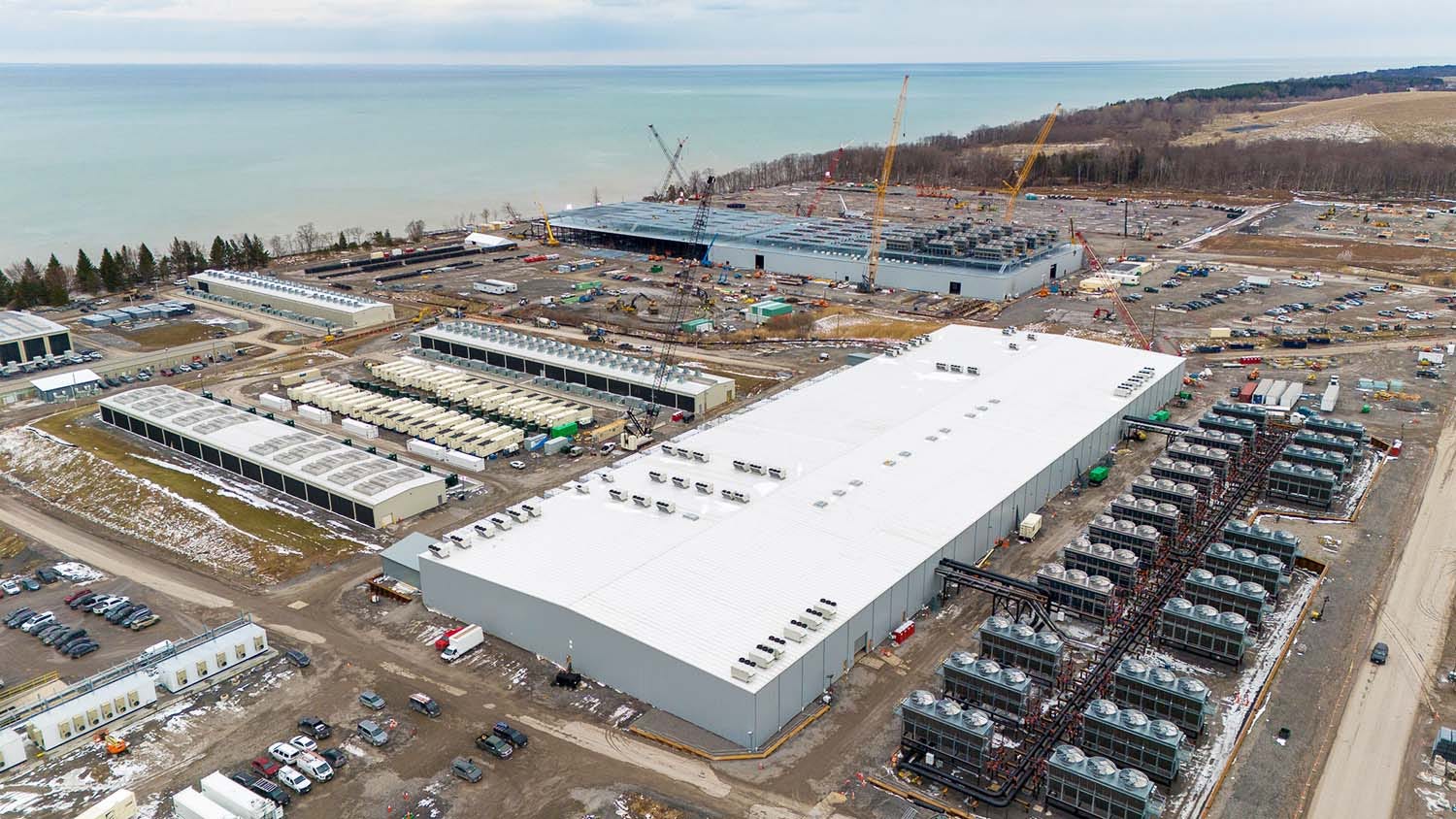
BARKER, N.Y. - On the shores of Lake Ontario, a former coal plant is rapidly becoming a massive AI data center.
The Lake Mariner Data campus from TeraWulf offers a glimpse of the transformative power of the digital economy, bringing economic renewal and the financial strength of giant tech companies to a small town in Western New York. And it’s doing it with almost entirely carbon-free energy.
Lake Mariner is a leading example of what “speed to power” looks like at the scale of the AI economy. TeraWulf is on an accelerated schedule to build three new data center buildings that will house more than 360 megawatts (MWs) of IT capacity. The goal is to complete these facilities in less than a year.
“This is the fastest ongoing data center build in the US right now,” said Sean Farrell, Chief Operating Officer of TeraWulf. “It’s very busy around the clock. It’s a 24-by-7 operation.”
TeraWulf is working closely with its partner Schneider Electric to deploy infrastructure on an accelerated schedule to provide AI capacity for its customers, primarily Fluidstack.
Schneider Electric and its Motivair unit have delivered more than $290 million in AI infrastructure solutions for the Lake Mariner data campus, the companies announced today. That includes liquid cooling solutions from Motivair and integrated power infrastructure from Schneider Electric to support HPC, cloud and AI workloads.
TeraWulf also has a high-profile partner in Google, which has provided a financial backstop for the Fluidstack leases.
Building at the Speed of AI
The digital infrastructure sector is facing a societal mandate to build better data centers - better for the community, better for the planet, and better for customers. At Lake Mariner, TeraWulf is highlighting the potential for projects to have global scale and local impact.
Upon full buildout, Lake Mariner is projected to support up to 750 MWs of power demand, using the legacy industrial site and power infrastructure to accelerate the creation of a next-generation AI campus.
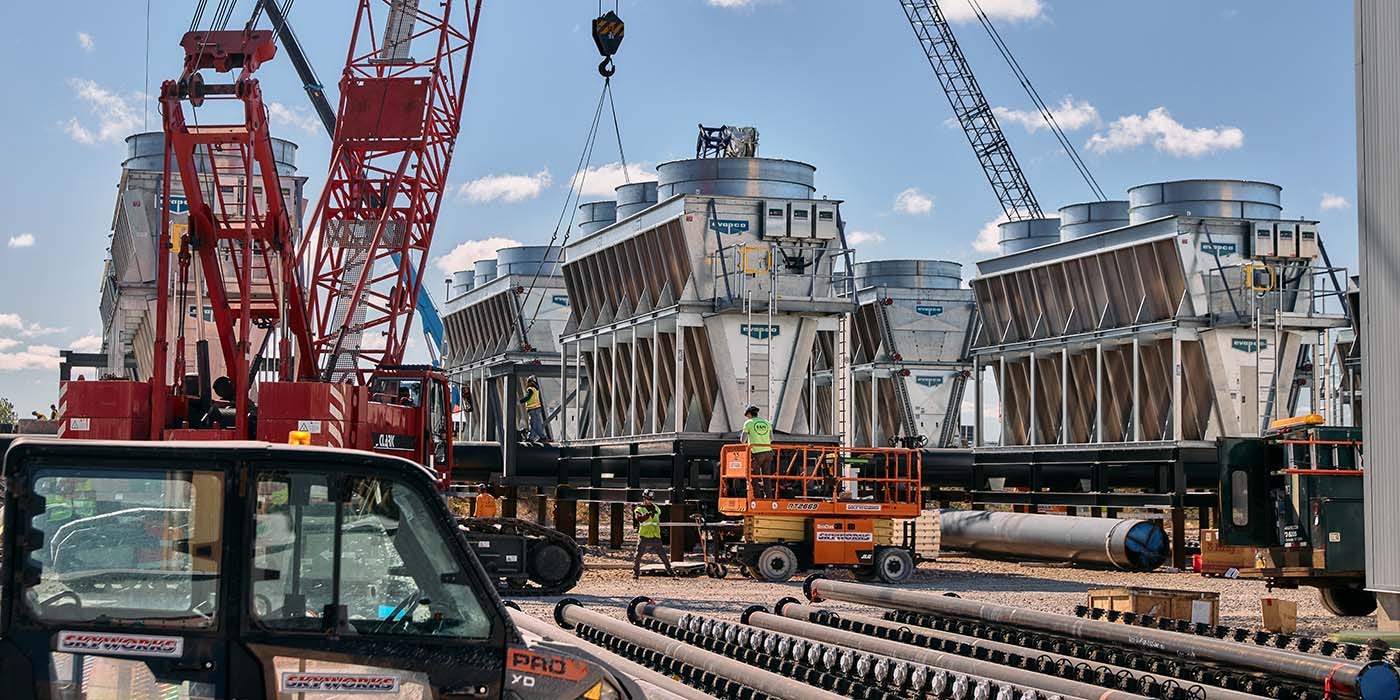
The 180-acre TeraWulf site is abuzz with activity, as the construction team orchestrates the operations of cranes, cement mixers, an armada of backhoes, and hundreds of contractors and construction workers.
There are three data centers already operating on the campus, plus the massive buildings under construction. AI infrastructure provider Core42 is a tenant, in addition to Fluidstack.
The current focal point of activity is CB4, a 330,000-square-foot building that will provide more than 160 MWs of IT capacity for Fluidstack.
The first steel at CB4 was deployed in early January. TeraWulf drove pilings 16 feet into the bedrock for the framework of the building, which will support 5,600 tons of steel - including an extraordinary rooftop superstructure for dozens of cooling units.
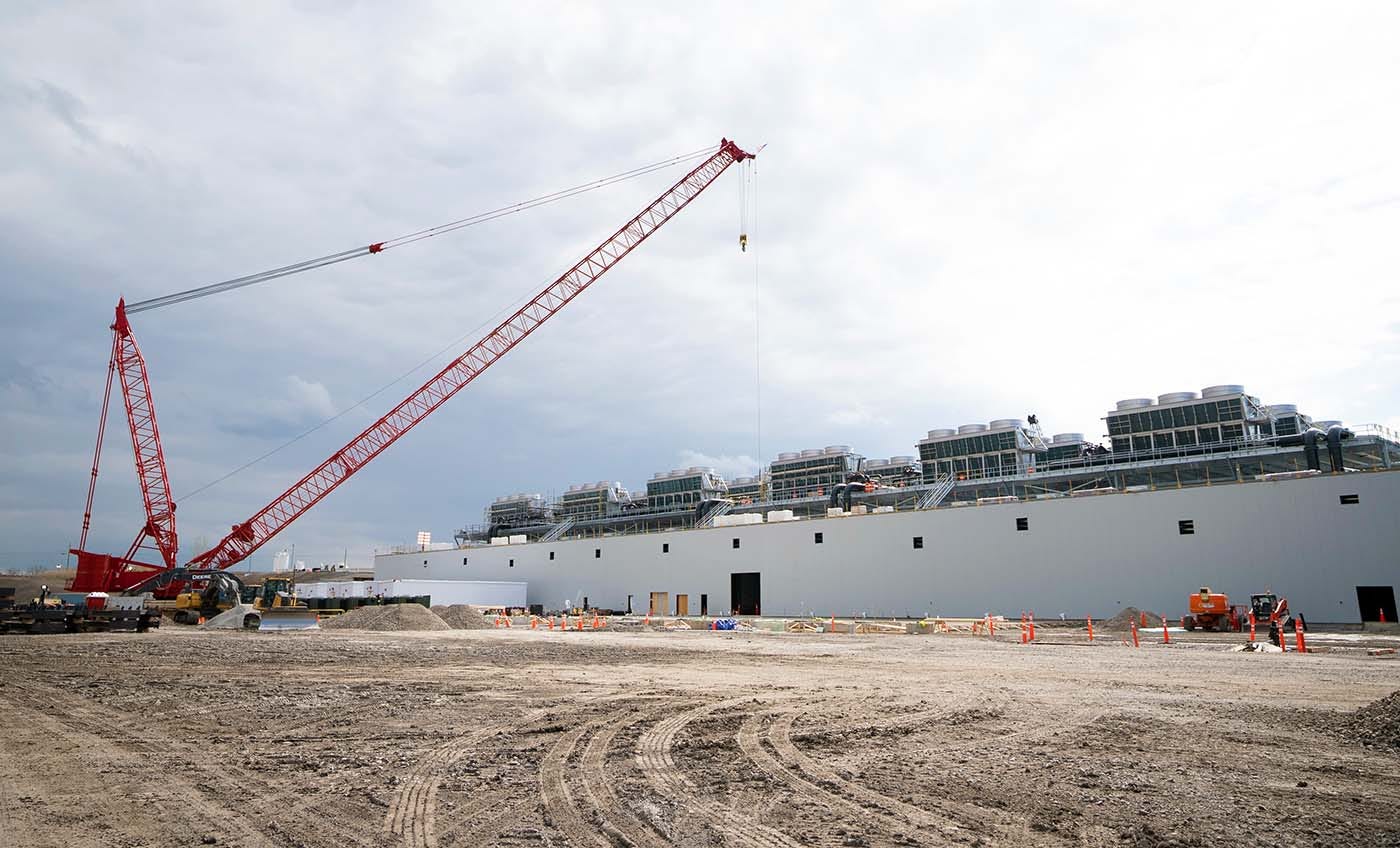
Huge power skids with UPS units arrive, ready to be attached to the building. This reflects the growing role of prefabrication - a strength of Schneider Electric - with level 3 and 4 commissioning conducted at the factory to speed deployment at the site.
Those UPS units will support the giant data halls, each providing more than 40 MWs of IT capacity. The first data hall is expected to be energized in July, with the rest added in phases by the end of the year.
The massive pipes supporting the cooling systems are prefabricated in Buffalo using 3D modeling, then assembled at Lake Mariner to create a giant network of cooling systems.
Power and Cooling
TeraWulf leases 180 acres of the original 1,800-acre campus for the Somerset Kintigh power plant, with an AES solar power facility slated to be built nearby.
The Lake Mariner site gets its power from the NYISO Zone A grid, which draws upon hydro power from Niagara Falls and nuclear energy from several plants in the region. The resulting power mix is 89 percent carbon-free as of the most recent NYISO data.
The campus uses a closed loop cooling system, which uses a small amount of utility water daily. Although the site retains a legacy water intake from its coal plant days, the new data campus does not draw from the Lake Ontario for cooling, TeraWulf says.
The cooling systems have evolved along with the site. The project started with the WulfDen, a 2-megawatt facility that served as a proof of concept for crypto mining, and now supports high-density IT workloads cooled using Motivair’s rear-door heat exchangers.
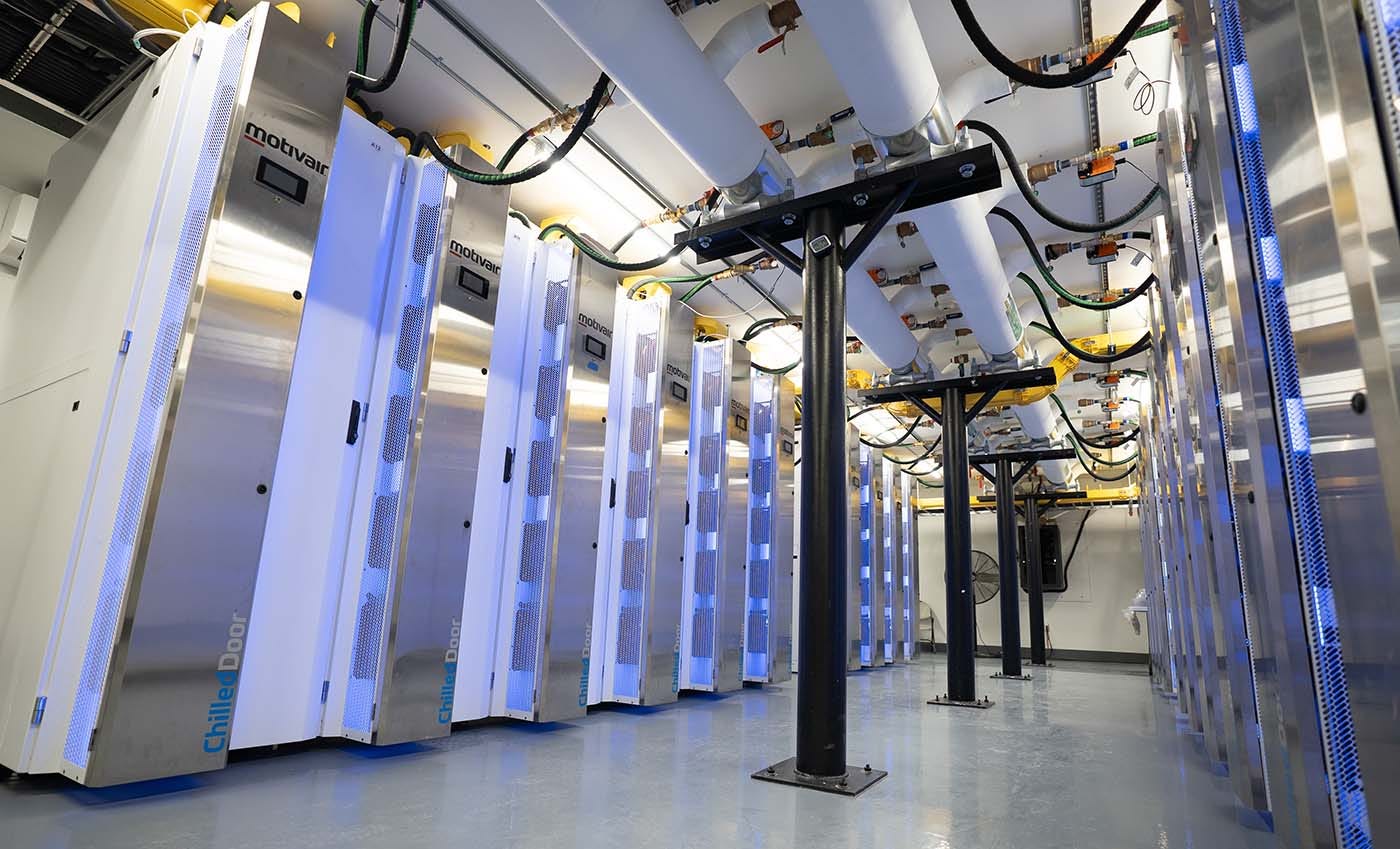
The Fluidstack projects at CB4 and CB5 are custom built for liquid-cooled workloads using direct-to-chip technology, supported by the closed loop system.
TeraWulf’s Strategy and Growth
TeraWulf is following an energy-first site selection strategy focused on converting coal plants and aluminum smelting facilities into cutting-edge AI factories.
The company was created by Beowulf Energy, an energy services company led by Paul Prager and Nazar Khan. The companies combined operations last year, and Prager serves as chairman and CEO of TeraWulf, with Khan as Chief Technical Officer.
TeraWulf seeks out “load pockets” in existing power grids with access to major transmission networks, and deploys compute power at those locations.
TeraWulf is now part of the crypto-to-AI power shift, joining the companies that procured huge amounts of power for cryptocurrency but have refocused their business models on AI and HPC.

The Lake Mariner campus was an early example of TeraWulf’s playbook. The campus is served by an existing substation and dual high-capacity 345 kV power lines, which once distributed power generated by the coal plant.
“For powered land, the grid connection is the long tent pole,” said Farrell. “When we go into a coal plant, that connection is there. We have the experience to leverage that existing interconnect. We’re not afraid to go after these brownfield assets.”
An interconnection study may take one or two years, Farrell said, but that is now shorter than the connection delays in most primary data center markets, which range from three to seven years.
TeraWulf now has 6 sites and nearly 4 gigawatts of capacity across its footprint. In February it announced the acquisition of two new sites:
A former Century Aluminum plant in Hawesville, Kentucky with 480 MWs of existing power availability, with the potential for expansion.
The Morgantown Generating Station, a grid-connected power generation facility with 210 MWs of capacity at present, with the land and power infrastructure to expand up to 1 gigawatt.
“Hawesville provides immediate access to scalable power, while Morgantown allows us to expand existing generation to meet growing load demand in a way that is net-positive for the grid,” Prager said in a press release. “Across both sites, we have the unique ability to serve end users while also delivering critically needed surplus electricity.”
TeraWulf also has campuses underway at Cayuga Lake in Lansing, N.Y. and in Abernathy, Texas.
Relationships have been key to the company’s rapid growth. That includes its relationship with Schneider Electric, as well as the large Fluidstack leases and accompanying financial backing from Google.
Google has guaranteed $3.2 billion of Fluidstack leases at Lake Mariner, and holds warrants equivalent to 14% of TeraWulf shares. Those shares have been among the sector’s top performers over the past year.
UPDATE: Shortly after this story was published, TeraWulf announced the acquisition of a campus in Muskie, Kentucky that is expected to support more than 1 gigawatt of data center capacity over time, with the first 500 MWs ramping in the second half of 2028.
The Community Factor
At a time of intense public scrutiny of data center projects, TeraWulf says its approach offers clear benefits to communities, which helped the Lake Mariner project advance.
“We’re bringing jobs and cleaning up brownfield sites,” said Farrell.
The Somerset Kintigh Generating Station was the economic backbone of the community, with a tax bill that at one point generated $20 million annually to Barker and its school district. That revenue declined steadily in the 2010s, and the workforce shrank to 55 employees when the plant was shuttered in 2020.
Lake Mariner is now a local employment hub. TeraWulf employs 120 workers - including 20 who previously worked at the coal plant - while Fluidstack has about 180 staff on site. The biggest workforce impact is the volume of contractors on the project, which typically includes 1,200 to 1,600 workers per day.
“We’re hiring the community, training the community, and supporting the community,” said Farrell. “We’re building these data centers where industry was lost.”
“Our main focus is educating the local community,” Farrell added. “We want to make sure everyone has the facts. You’ve got to support the community, because they have valid questions. To be a community partner, you have to be honest with your neighbors. Once they see that we’re going to be a part of the community, they accept us.”
The public meetings have included some tough feedback, Farrell said, adding that data center developers need to listen carefully at those moments.
One of the community concerns in Barker was noise from the crypto mining hardware in the initial projects on the site. TeraWulf added noise attenuation, and the new facilities at the site feature Evapco cooling equipment optimized for low noise.
TeraWulf’s redevelopment at Lake Mariner began before the recent surge in community pushback. It is developing a similar project at nearby Lansing at a former coal plant along Cayuga Lake, which continues to advance but has faced opposition.
The Supply Chain Matters
An essential piece of building at speed and scale is the supply chain.
“There’s no way you can build this fast without quality partners who can deliver quickly,” said Farrell. “By working closely with industry leaders like Schneider Electric and Motivair, we are accelerating the development of AI-ready capacity at our Lake Mariner facilities.”
“As demand for AI infrastructure accelerates, ‘time to power’ has become a defining constraint on growth,” said Manish Kumar, Executive Vice President, Secure Power & Data Centers at Schneider Electric. “Operators need partners who can bring together advanced infrastructure, services, and expertise in energy technology to underpin large-scale AI data center deployments at pace.”
A key player in that effort was Motivair by Schneider, a liquid cooling specialist based in the Buffalo market that was acquired last year by Schneider Electric.
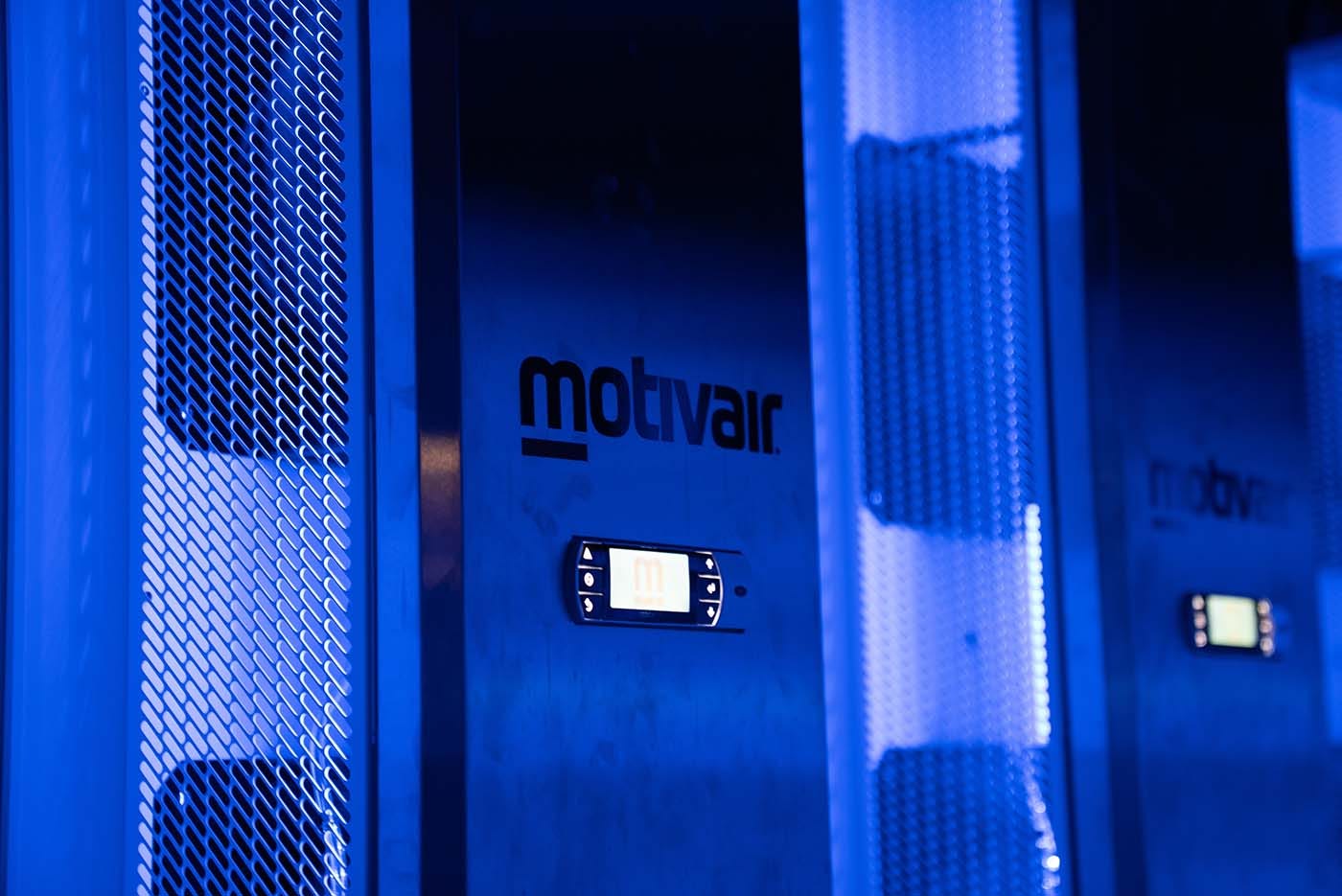
Motivair is also known in the industry for its rear-door heat exchangers (RDHx), and its coolant distribution units (CDUs) support all three U.S. exascale supercomputers, including the Top500 leader El Capitan at Lawrence Livermore National Laboratory. Motivair is supporting TeraWulf with both CDUs and RDHx equipment.
TeraWulf is also deploying Schneider Electric Galaxy VX UPS systems, Galaxy Lithium-ion Battery Systems, NetShelter racks, and is using Schneider’s EcoStruxure software for advanced monitoring.
“Our partnership with TeraWulf establishes a strategic blueprint for pairing on-site power, AI-enabled automation, advanced liquid cooling, and digital intelligence at a legacy industrial site,” said Kumar. “We are delivering resilient, efficient, and scalable data center solutions at the speed and scale this AI era demands.”
Here’s a short video from TeraWulf providing a sense of that speed and scale: