

Podcast: Navigating the 2026 AI Data Center Boom
On the Shared Everything Podcast, We Discuss Power, Cooling, and the Reality of Scale

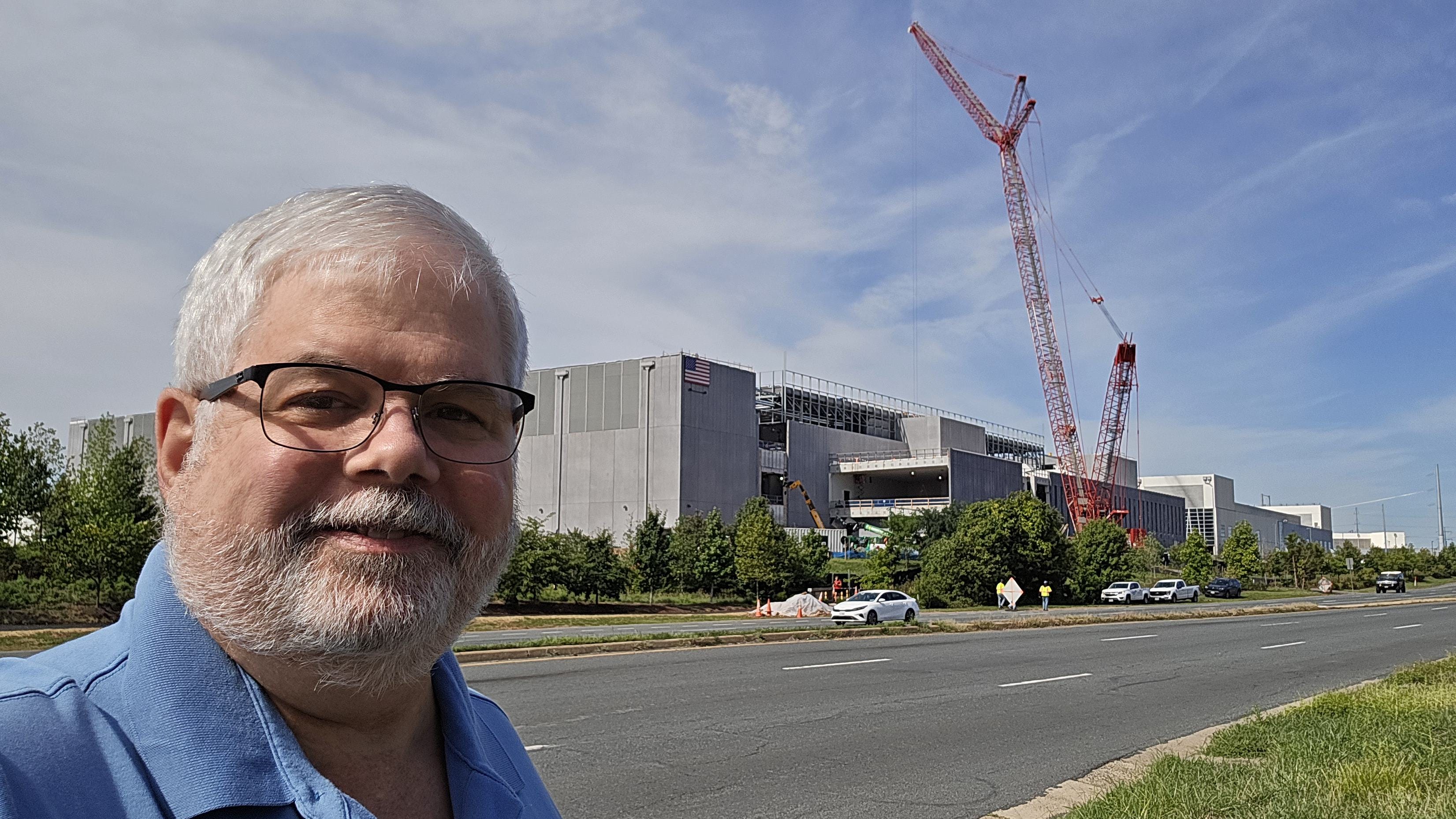
Datacenter demand is enormous. Data center capacity is limited. So how does the digital infrastructure sector solve these challenges?
“Can We Build the Infrastructure We Keep Promising” was the topic as I made a guest appearance on the Shared Everything podcast from VAST Data. It’s hosted by Nicole Hemsoth Prickett, who for many years has been a leading voice in coverage of HPC, supercomputing and enterprise data centers.
We discussed how physical limitations are forcing a massive reality check. As power grids reach capacity and communities push back, the industry is shifting from raw expansion to hyper-efficiency and radical engineering. Read on to learn how top investors filter real projects from hype, how advanced density is reshaping system architecture, and when next-generation power sources (nuclear, space data centers) will actually arrive.
Here’s the conversation from my guest appearance on the Shared Everything podcast with Nicole Hemsoth Prickett.
This Data Center Download provides key insights from the Shared Everything podcast.
📌 Key Takeaways
Filter the Hype: Evaluate project viability by focusing on experienced operators rather than speculative builders who lack proven operational capacity.
Prepare for Liquid Cooling: Prepare to transition infrastructure to support high-density cooling as upcoming chip roadmaps push rack power demands toward 600 kW.
Optimize Existing Grids: Leverage load flexibility, virtual power plants, and battery storage as the strategies to accelerate “speed to power” instead of simply waiting for new grid interconnections.
Set Realistic Timelines: Anticipate a 2030s horizon for small modular nuclear reactors (SMRs) to realistically scale in the commercial market.
The New Era of Data Center Constraints
The massive demand for AI compute has run into physical, geographical, and social limitations. The industry is no longer operating in an era of unlimited expansion, requiring developers to navigate a complex web of power deficits and community pushback.
Sifting Reality from Hype in Project Funding
A major structural imbalance exists between proposed data center capacity and what can actually be built. Analysts from Aurora Energy Research tracking 280 gigawatts of proposed projects reveal a stark division: only 80 gigawatts come from experienced operators, while 150 gigawatts are proposed by developers who have never built a data center before.
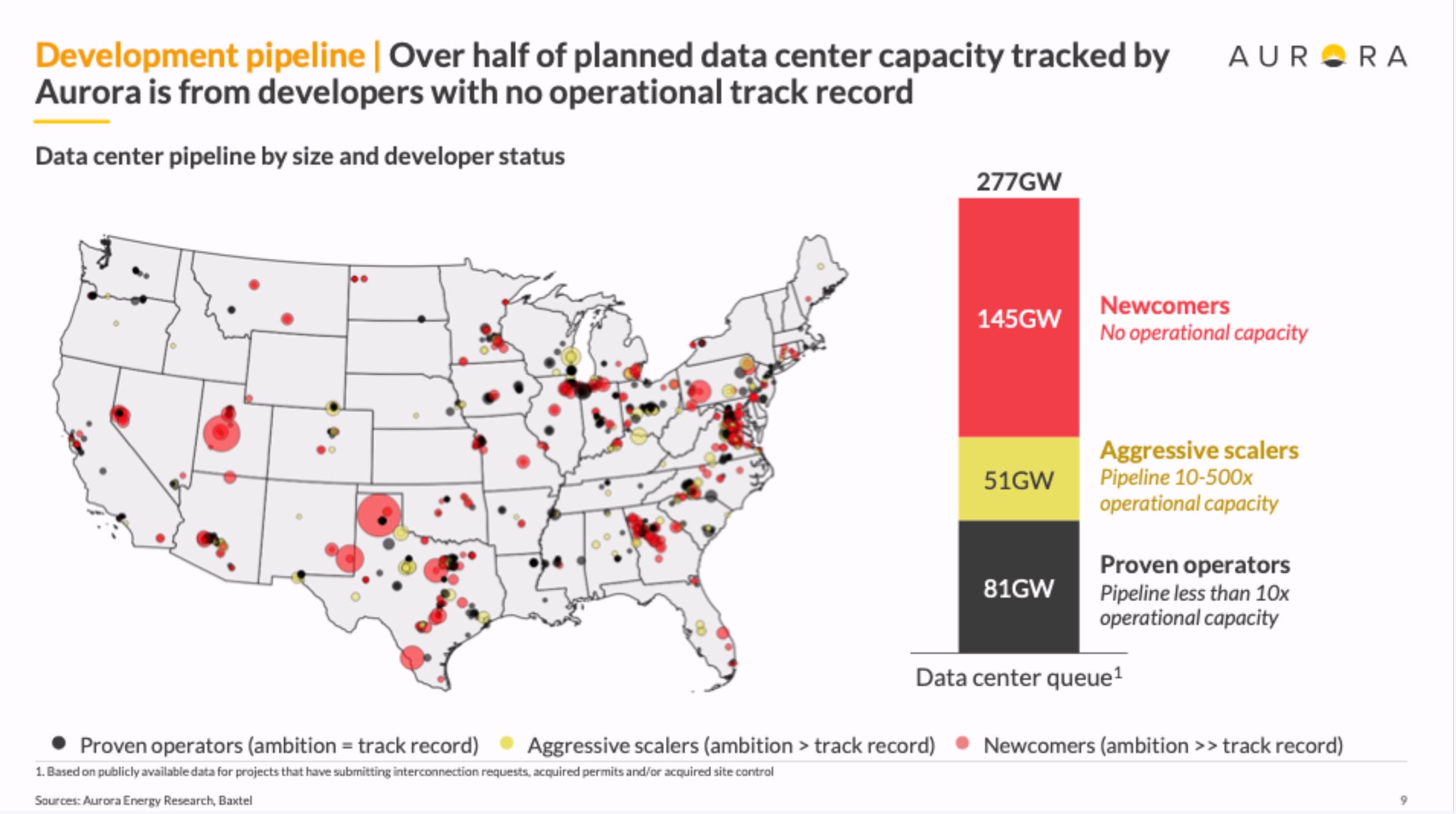
Investors are becoming highly discerning, favoring established teams or funding platforms like Helix Digital Infrastructure (led by former AWS CEO Adam Selipsky) that may acquire existing, proven operators.
💡 Key Insight: Access to power is the ultimate differentiator. Projects with secured power and experienced teams will secure funding, while unproven greenfield proposals will face challenges. Consolidation is likely.
Navigating Community and Political Resistance
Data centers are facing unprecedented local opposition, a trend that has escalated dramatically over the last decade. Many communities are actively rejecting new builds due to concerns over noise, aesthetic impact, and strain on local utility grids. This resistance acts as a major constraint on development, proving that technology and capital are no longer the only hurdles to clear.
Engineering for Extreme Density and Efficiency
With hardware demands skyrocketing, data center operators are forced to rethink everything from silicon layout to facilities engineering to keep systems running without starting electrical fires.
The Inevitable Transition to Liquid Cooling
Air cooling is no longer sufficient for most AI workloads. With future hardware roadmaps pointing toward staggering 600-kilowatt racks, the industry is rapidly transitioning to advanced liquid cooling. While direct-to-chip liquid cooling using cold plates is the current standard, operators are preparing for two-phase (phase-change) cooling packaged in cold-plate form factors, and even microfluidics built directly into the silicon.
💡 Key Insight: According to AFCOM survey data, 40% to 50% of data center operators are actively evaluating liquid cooling, realizing their legacy infrastructure will soon be obsolete.
Redesigning Power and Software Architectures
Efficiency is being designed into every layer of the technology stack. On the hardware front, operators are shifting to 800 volt DC power distribution to minimize energy loss from the grid to the chip. Simultaneously, because physical space is limited, software engineers are focusing heavily on optimizing code and AI tokens to get more compute out of existing hardware footprint.
Solving the Power Crisis
Because power is the primary bottleneck for deploying new GPU clusters, the industry is desperate for fast, scalable energy solutions.
Optimizing the Existing Grid for Speed to Power
Building new power plants takes too long for AI companies wanting to monetize their hardware immediately. Instead of relying solely on on-site gas turbines, forward-thinking operators are focusing on grid flexibility. By utilizing virtual power plants, solar integrations, and large-scale battery storage, data centers can curtail their loads during peak grid demand, allowing utilities to grant them power access much sooner.
💡 Key Insight: Optimizing the grid we already have through load curtailment and battery storage is the fastest, most sustainable path to securing energy without burdening local communities.
The Reality of SMRs, Space, and Water-Based Facilities
While alternative concepts sound promising, their practical timelines vary widely:
Small Modular Reactors (SMRs): The industry is highly receptive to SMRs, but regulatory hurdles and construction timelines mean nuclear-powered data centers won’t scale until the 2030s.
Space-Based Compute: Despite the hype of “free solar power” in orbit, physical limitations on launching massive solar arrays, thermal management, and radiation make space data centers a niche solution rather than a mass-scale fix.
Water-Based Data Centers: Floating or ship-mounted data centers (such as those being deployed by Samsung Heavy Industries) are seeing a resurgence as viable, rapidly deployable alternatives for coastal regions.