

Solid State Transformers Could Reshape AI Infrastructure
VC Firms Pour $280 Million Into Startups Heron Power, DG Matrix and Amperesand

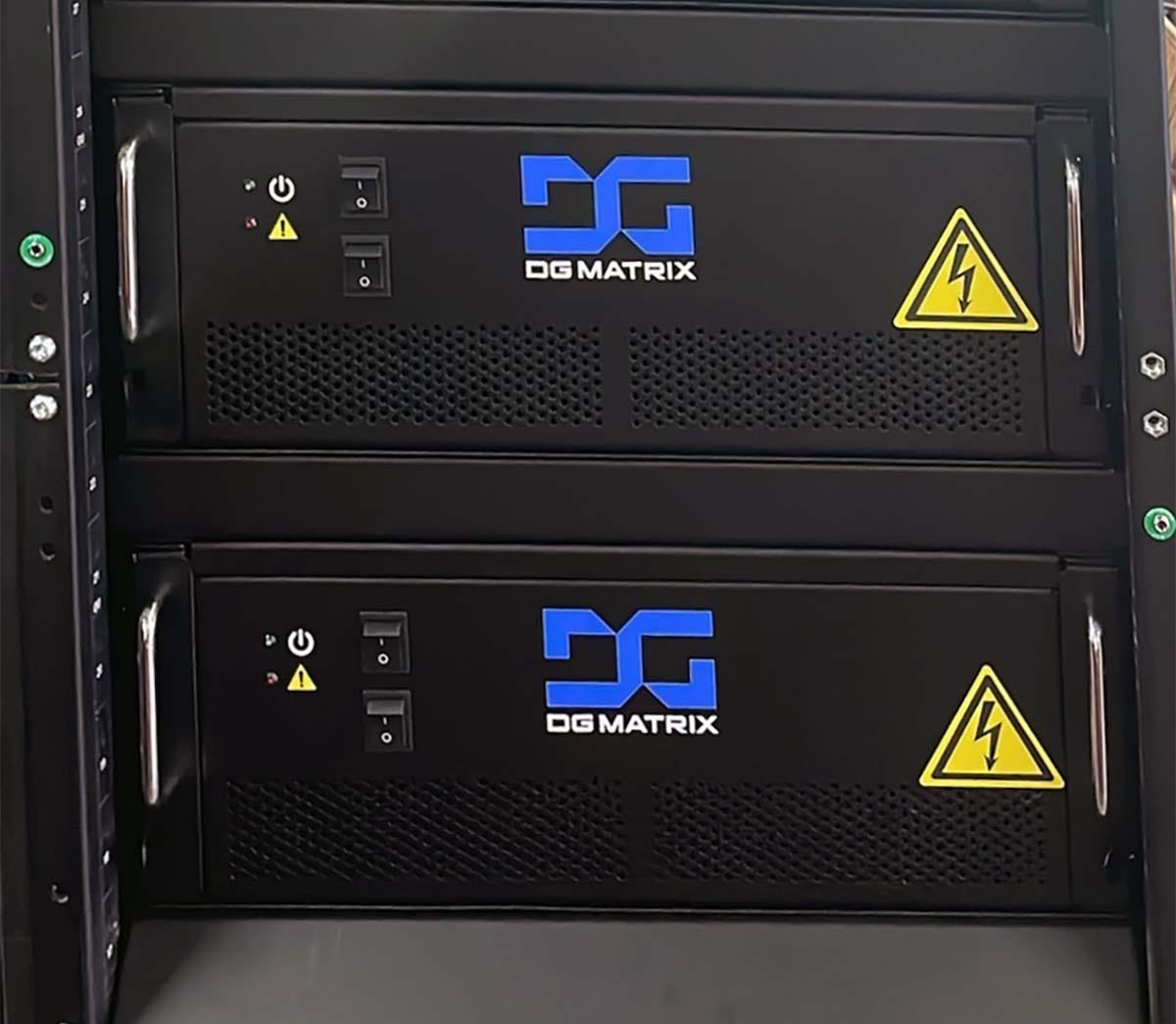
Three companies building next-generation power conversion technology have raised a combined $280 million in the past year, while another has been acquired by a major power vendor. These deals anticipate that the solid-state transformer (SST) will play a key role in the next phase of the AI buildout.
The transformer, a device whose core design dates to the 19th century, is giving way to software-defined power electronics that are purpose-built for the AI era.
The SST is emerging as a critical piece of the transition to 800 VDC power distribution, the architecture that NVIDIA and its partners are driving for next-generation AI infrastructure. SSTs also have the potential to help address “speed to power” for AI data center campuses, which face delays in the transformer supply chain.
The numbers tell part of the story:
Heron Power closed a $140 million Series B in February 2026, co-led by Andreessen Horowitz’s American Dynamism Fund and Breakthrough Energy Ventures.
DG Matrix closed a $60 million Series A the same month, led by Engine Ventures with participation from Mitsubishi Heavy Industries, ABB, and others, bringing total capital raised to over $100 million.
Amperesand raised an $80 million Series A in November 2025, co-led by Walden Catalyst Ventures and Temasek, targeting 30 megawatts of commercial deployments in 2026.
Eaton completed its acquisition of Austin-based Resilient Power Systems in August 2025, bringing medium-voltage SST technology into one of the world’s largest power management companies.
Meanwhile, two other public companies, Enphase Energy and SolarEdge, have recently launched SST offerings specifically targeting AI data centers.
The common thread: the traditional transformer cannot keep pace with the speed, density, and power scale that AI infrastructure now demands.
“The transformer hasn’t fundamentally changed in 100-plus years,” said Haroon Inam, Founder & CEO, DG Matrix. “Copper or aluminum windings around a steel core, likely oil-filled, built for a single purpose. That works when a server rack pulls 5 kilowatts and a workload is predictable.
“It doesn’t work when a single NVIDIA MGX rack demands 600 kilowatts, swings from idle to full load in microseconds, and sits behind a grid interconnection queue that’s three to five years long.”
For the data center sector, SSTs are an emerging technology currently moving from the lab and pilot work into prototypes and first commercial offerings. Broad deployment will require operator comfort at data-center scale.
But the AI boom offers a compelling opportunity for SST specialists, and investors and equipment vendors are paying full attention. Here’s a deep dive into SSTs and the leading companies and supporting players in the STT ecosystem.
Why Solid-State Transformers Matter
A solid-state transformer (SST) replaces traditional windings and cores with power semiconductors, primarily silicon carbide (SiC) or gallium nitride (GaN) devices, and software-defined control logic.
The SST converts voltage like a conventional transformer, but also routes power from multiple sources simultaneously, responds to load changes in milliseconds, integrates battery backup without separate UPS hardware, and provides real-time grid stabilization.
The physical difference is significant. SST-based systems can reduce electrical equipment footprint by 70 to 80 percent, eliminating layers of switchgear, distribution transformers, and UPS systems that a conventional data center power chain requires. By supporting multiple ports, they are also ideal for microgrid integrations that combine generation sources.
“Too much of today’s electrical infrastructure is passive, clunky equipment designed decades ago,” said Drew Baglino, Founder and CEO of Heron Power. “We need new, more capable solutions to keep pace with accelerating energy demand and the rapid growth of gigascale compute.”
Addressing Data Center Bottlenecks
The data center power problem has two distinct layers.
The first is speed to power. Utility power constraints are creating lengthy grid interconnection timelines, while lead times for medium- and high-voltage transformers can now run 18 to 36 months. SSTs can address this directly by collapsing procurement and installation timelines, and in some architectures can connect directly to medium-voltage distribution grids without a traditional transformer layer.
The second is density: getting power to the rack efficiently once it arrives. AI workloads have pushed rack power requirements past 100 kilowatts (kWs), with NVIDIA’s Rubin Ultra platform targeting up to 600 kilowatts per rack. The conventional 54-volt DC in-rack distribution architecture hits hard physical limits at those densities.
AI training loads add a third wrinkle: a GPU cluster can swing from idle to full power in seconds. SSTs with integrated energy storage absorb those load spikes at the rack level, protecting both the facility’s internal distribution and the wider grid.
The 800 VDC Transition
NVIDIA is working with more than 20 AI infrastructure providers, including CoreWeave, Lambda, Nebius, and Oracle Cloud Infrastructure, to design data centers built around 800-volt direct current power distribution, or 800 VDC. The target platform is NVIDIA’s Rubin Ultra GPU generation, expected in 2027, which will support rack densities up to 600 kilowatts. Today’s AI clusters run at roughly 120 kilowatts per rack.
Moving to 800 VDC eliminates most of the intermediate conversion steps in the power chain, with NVIDIA projecting up to a 5 percent improvement in end-to-end power efficiency, a 70 percent reduction in maintenance costs from fewer power supply unit failures, and a meaningful reduction in cooling load by eliminating AC/DC conversion hardware inside the racks.
“800 VDC fixes the architecture, not just the voltage,” said Inam of DG Matrix. “By taking the data center to DC at the row, or ideally at the building, operators eliminate the rectifier-inverter conversion step entirely. NVIDIA’s MGX reference design recognizes this, which is why they are standardizing 800 VDC across the ecosystem.
The end goal is achieving 34.5kV AC to 800V DC power conversion, creating a simplified pathway from grid to rack, with native per-rack 800V DC outputs aligned to industry reference designs. That single-step conversion from medium-voltage grid power to rack-ready 800 VDC is the architectural move outlined in NVIDIA’s blueprint.
“As data centers approach gigawatt-scale campuses built around megawatt AI compute racks, they are rightfully taking inspiration from mature gigascale DC technologies like energy storage and solar,” said Baglino of Heron Power. “Direct 34.5kV AC to 800V DC conversion is the efficient, streamlined, scalable power architecture that global leaders in AI need to achieve their goals.”
That said, NVIDIA has noted that deploying 800 VDC at the facility level introduces new challenges in safety, standards, and workforce training, and that the transition will occur in phases.
The first phase of the 800 VDC transition is expected to feature “sidecar” racks installed alongside compute racks, enabling denser GPU and CPU racks while separating out power components for 800 VDC conversion.
Full-scale production is tied to the 2027 Kyber rack rollout, and the neoclouds optimizing for NVIDIA’s AI factory designs are likely to move first.
The SST Data Center Ecosystem
Here’s a look at the leading companies developing SSTs and the supporting ecosystem.
