

5 Notable Data Center Links, July 4 2026
Fuel Cells Gain Traction, Realty Income Targets Data Centers, Digital Gateway Saga Ends

Each week I curate 5 links from the data center sector that I find particularly interesting, with my commentary on why they merit your attention.
Sound interesting? Subscribe and get them every Saturday.
5 Notable Data Center Links
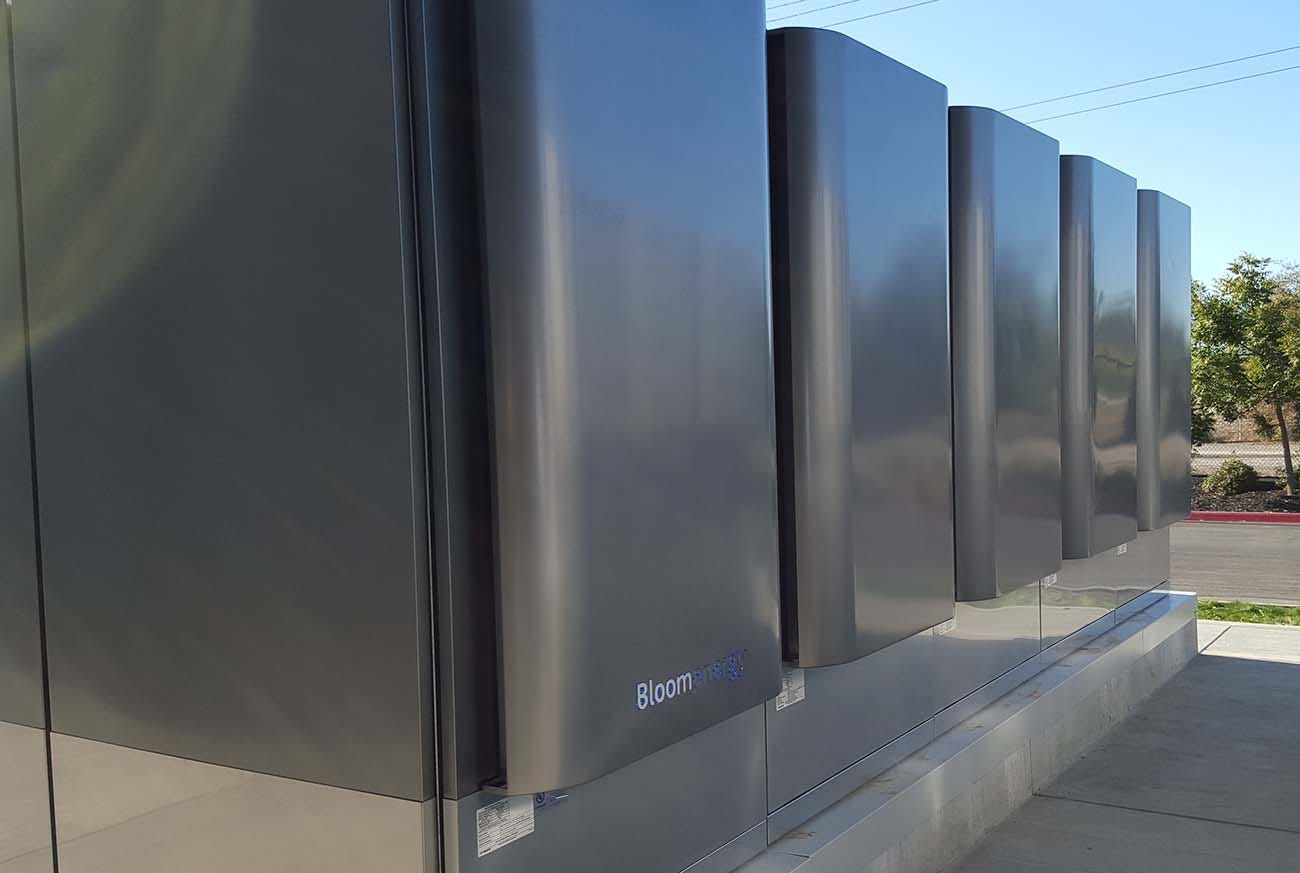
Bloom, Brookfield Expand Partnership to $25 Billion - It’s been a big week for fuel cells in data centers. Brookfield and Bloom Energy said they are expanding their financing framework for Bloom fuel cell projects from $5 billion to $25 billion. The expanded commitment will help fund and deploy Bloom’s solid oxide fuel cell systems for AI infrastructure, seizing upon an opportunity to deliver “speed to power” for data centers facing long delays in access to utility power.
Bloom Energy has been one of the primary beneficiaries of this trend, emerging as a key supplier for AI campuses and microgrids. Meanwhile, FuelCell Energy announced a strategic agreement for up to 380 megawatts (MW) of fuel cell power to developer Fit Energy. The agreement includes an immediate deposit for an initial 30 MW of power scheduled to begin delivery later this year.
The Prince William Digital Gateway is Fully Dead - QTS Data Centers has ended its effort to build the Prince William Digital Gateway, which at one time was on track to be the world’s largest cloud campus, with plans for about 22 million square feet of data centers. The other primary developer, Compass Datacenters, withdrew earlier this year. The decision follows years of ferocious opposition from environmentalists and community groups, which included a 27-hour public meeting and the electoral defeat of the supervisor board chair who backed the data center. The Digital Gateway began as a resident-led initiative to bundle more than 200 properties into a massive 2,100-acre data center park, as I outlined in early coverage at DCF in 2022. Local anti-development groups were quickly able to recontextualize it as a David vs. Goliath battle against Big Tech. The dispute preceded the AI boom, but the anti-data center arguments central to the Manassas furor have been amplified by the growing resistance to AI infrastructure.
Realty Income Moves Into Data Centers With JV - This is an interesting story about data centers and their evolution on the investing spectrum. Data centers are both technology and real estate, and thus have historically been viewed as a riskier bet than established real estate asset classes like office buildings or shopping centers. This week Realty Income, a REIT which calls itself “The Monthly Dividend Company,” pushed further into the data center sector with a JV with Cloud Capital and an unnamed global investor. The venture’s first move is to acquire three Northern Virginia data centers, all leased or pre-leased to investment-grade tenants and valued at $6 billion. “The combination of high-quality data center assets leased to investment-grade tenants, long-duration triple-net leases, and an attractive return profile reflects our disciplined approach to capital allocation and value creation,” said Sumit Roy, President and Chief Executive Officer of Realty Income. The JV will take a programmatic approach, a repeatable process that typically pairs a developer and investor building for investment-grade tenants. Cloud Capital and development affiliate CloudHQ are led by Hossein Fateh, one of the industry’s master builders with a track record of leasing huge facilities to hyperscale tenants, usually using a triple-net lease structure in which the tenant bears most of the ongoing expenses. That formula is of growing interest to huge investors, as seen in the recent launch of Blackstone Digital Infrastructure Trust, a public REIT (symbol BXDC), which was created to acquire newly constructed, income-generating, stabilized data centers leased to investment-grade hyperscale tenants.
Meta is Planning a Cloud Business to Sell AI Compute Power - Bloomberg reported this week that Meta Platforms is developing plans for a cloud infrastructure business that will sell access to AI computing power and models. The report boosted shares of Meta while prompting price drops for leading neoclouds. A couple of interesting takes: Tom’s Hardware notes that Meta has been one of the neocloud sector's most important customers. The company expanded its cloud computing agreement with CoreWeave to $21 billion in April and has signed contracts worth up to $27 billion with Nebius, roughly $48 billion committed to renting other companies’ GPUs. Here on Substack, Semianalysis argues that Meta’s data center and compute procurement isn’t slowing down, but will accelerate, with CapEx in 2027 that will be “shockingly high.”
Schneider Electric Expands EcoCare to 3-Phase UPS - Schneider Electric is betting that AI-driven, condition-based maintenance can replace the fixed service calendars that have long governed how UPS systems get serviced. The company announced it has expanded EcoCare, its remote monitoring and maintenance plan, to cover 3-phase UPS equipment, extending a model it has already applied to electrical distribution gear, single-phase UPS, modular data centers and building management systems. EcoCare combines 24/7 remote monitoring with AI models that analyze wear, aging, temperature and maintenance history to recommend when a unit actually needs service, rather than defaulting to a preset schedule. Data comes from native co,nnectivity or retrofitted sensors and network management cards, and flows to Schneider’s Connected Services Hub, where analysts and predictive analytics track UPS assets at the component level and flag early signs of failure. Schneider says condition-based maintenance can extend the interval between UPS service visits from one year to as long as two, cutting intrusive maintenance visits and planned downtime by up to 50 percent.
If you found 5 Notable Links useful, please subscribe so you can get it each week!

